

Does Tattoo Numbing Cream Wear Off Fast?
Table of Contents
- How Long Does Tattoo Numbing Cream Last
- Why Tattoo Numbing Cream Wears Off Quickly
- How to Use Tattoo Numbing Cream for Maximum Duration
- Can You Still Feel a Tattoo With Numbing Cream
- Tattoo Numbing Cream Side Effects and Safety
- What to Do When Numbness Wears Off During Your Session
- Short-Duration vs Long-Duration Numbing Formulas
- Frequently Asked Questions
Last Updated: October 7, 2026
How Long Does Tattoo Numbing Cream Last
Tattoo numbing cream typically lasts between one and three hours, depending on the formula, application method, and individual skin response, though how long tattoo numbing cream wear off varies significantly based on several factors.

The duration varies based on several factors. A thick application, proper skin preparation, and occlusion (covering the area) all extend how long the numbing effect holds. Conversely, wiping away the cream, excessive sweating, or thin application can shorten the window significantly.
The truth is straightforward: most commercial numbing creams wear off faster than people expect, which is why timing and reapplication strategy matter so much.
If you're planning a longer session, you'll need a plan. That might mean using a reapplicable spray midway through, or choosing a formula designed for extended duration. Understanding these variables upfront helps you stay comfortable throughout your ink.
Why Tattoo Numbing Cream Wears Off Quickly
Numbing creams fade fast because they're fighting your body's natural processes. Once the active ingredient (typically lidocaine) begins absorbing through the skin, it starts getting metabolized and distributed throughout your system.
Several specific factors accelerate this wear-off:
The cream gets wiped away. Artists need to see the skin clearly, so they wipe off the numbing cream before starting. Once removed, that protective barrier is gone. The numbing effect continues briefly from what's already absorbed, but without the cream sitting on the skin, the duration shortens.
Sweat and blood reduce effectiveness. During a tattoo session, the area bleeds slightly and you may sweat. Both dilute the remaining cream and wash away any surface layer still present. This is especially true for larger pieces or longer sessions.
Your skin type affects absorption. Thicker, oilier skin absorbs topical products differently than thin or dry skin. Someone with naturally dry skin might see faster absorption and longer numbing.
Body temperature plays a role. Warmer skin increases blood flow and speeds up absorption. If your body temperature rises during the session (from nervousness, exertion, or the studio environment), the numbing cream gets metabolized faster.
Application Technique Matters
How you apply the cream directly impacts how long it works. A rushed dab won't deliver the same results as a thick, deliberate application worked into the skin.
The best approach is to use a generous amount and rub it in thoroughly. Don't just spread it across the surface. Work it into the skin with firm, circular motions for 30 to 60 seconds. This pushes the active ingredient deeper and ensures better absorption.
Many people make the mistake of applying a thin layer and hoping it sticks around. Thin applications absorb quickly and fade just as fast. You want enough cream that some remains on the surface even after rubbing it in.
How Much Cream You Apply
The amount matters. A pea-sized dab simply won't last as long as a quarter-sized or larger application. Think thick, not thin.
For a small area (like a wrist or ankle piece), use roughly a quarter-sized amount. For medium areas (calf, forearm, shoulder), use a half-dollar-sized amount or more. For large sessions, you might apply cream across multiple areas in succession, using generous amounts for each zone.
The cream that stays on the surface continues releasing active ingredient over time. More cream on top means more sustained release. This is why "going in heavy," as the pros say, genuinely extends duration.
Covering the Area Affects Absorption
After applying and rubbing in the numbing cream, covering the area with plastic wrap or a similar occlusion dramatically improves absorption and duration.
Covering traps heat against the skin, which increases blood flow and speeds up absorption initially. But once absorbed, the occlusion also prevents the cream from evaporating or being wiped away. This creates a longer-lasting numbing effect overall.
Leave the covering on for 40 to 50 minutes before your session. When you remove it, the skin will look slightly red or flushed, which is normal. The numbing will be at its peak.
How to Use Tattoo Numbing Cream for Maximum Duration
Getting the most out of your numbing cream requires a deliberate process. Timing, preparation, and technique all matter.
Preparation Before Application
Start with clean, dry skin. Wash the area with mild soap and water, then pat completely dry. Any moisture, sweat, lotion, or water, reduces how well the cream absorbs.
If the area has hair, shave it off. Hair creates a barrier that prevents the cream from making full contact with the skin. A smooth surface allows for better absorption and more effective numbing.
Some protocols recommend wiping the area with alcohol before applying the cream. Alcohol removes oils and any remaining bacteria, creating an ideal surface for absorption. Let the alcohol dry completely before applying the numbing cream.
The Right Application Process
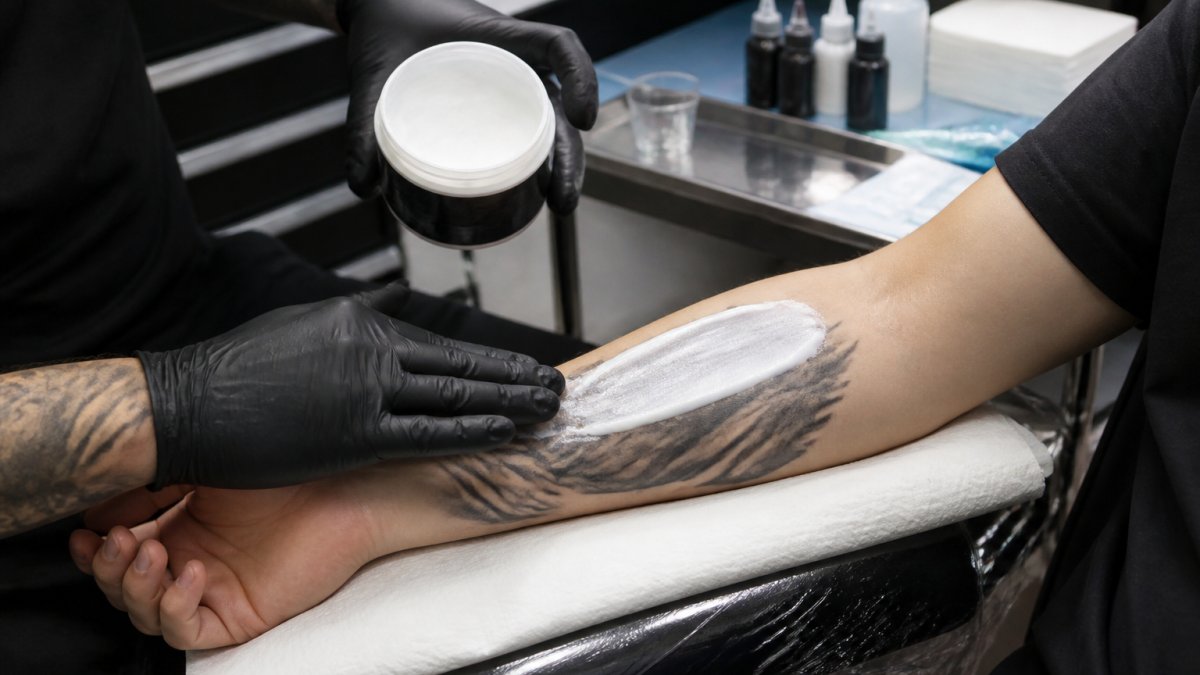
Apply a generous amount of cream directly to the target area. Don't skimp. Use a quarter-sized amount for small areas, and scale up for larger zones.
Rub the cream in using firm, circular motions. Work it into the skin for 30 to 60 seconds. The goal is to push the active ingredient through the outer layer and into deeper tissue where nerves respond.
After rubbing it in, apply another thick layer on top. This second layer sits on the surface and continues releasing numbing agent throughout the session.
Cover the area with plastic wrap, a plastic bag, or a waterproof bandage. This occlusion traps heat and prevents evaporation. Leave it in place for 40 to 50 minutes.
Remove the covering just before your artist begins. The skin underneath will be slightly flushed and very numb. You're ready.
Timing Your Application
Apply the numbing cream 40 to 50 minutes before your scheduled session start time. This gives it time to fully absorb and reach peak effectiveness right when the needle hits.
If your appointment is delayed, reapply a fresh layer of cream 40 to 50 minutes before the actual start. Don't apply it too early and then wait an hour, you'll lose the window of maximum effectiveness.
Bigfoot Relieve Numbing Cream - 60ml →
For sessions longer than 90 minutes, plan to reapply or use a numbing spray halfway through. Bigfoot Relieve Spray works well as a mid-session touch-up when the initial cream begins fading.

Can You Still Feel a Tattoo With Numbing Cream
Yes, you'll still feel some sensation even with numbing cream applied. Numbing cream reduces pain significantly, but it doesn't eliminate all feeling.
What you'll experience is pressure and vibration from the needle, along with a dull ache rather than sharp pain.
The numbing effect varies by location on your body. Areas with thinner skin (ribs, spine, collarbone) tend to hurt more even with cream. Areas with thicker skin (calf, forearm, shoulder) often feel much less intense.
Individual pain tolerance also plays a role. Some people naturally feel less discomfort. Others are more sensitive. Numbing cream helps everyone, but it won't turn a painful session into a painless one.
If you're getting a large or particularly painful piece, discuss your concerns with your artist beforehand. They can help pace the work, take breaks, and potentially suggest reapplication of numbing spray midway through if needed.
Tattoo Numbing Cream Side Effects and Safety
Quality numbing creams are generally safe when used as directed. The most common active ingredient, lidocaine, has been used in topical products for decades and has a strong safety profile.
Mild side effects can include temporary redness, slight swelling, or a cooling sensation at the application site. These are normal and fade quickly.
Some people experience allergic reactions to specific ingredients in the formula. If you have sensitive skin or known allergies, check the ingredient list before applying.
Avoid getting numbing cream in your eyes or mouth. If contact occurs, rinse thoroughly with water.
If you experience severe swelling, difficulty breathing, or signs of an allergic reaction, seek medical attention immediately. These are rare but warrant professional evaluation.
Pregnant individuals should consult their healthcare provider before using numbing cream, as systemic absorption of lidocaine in pregnancy is a consideration, though topical use is generally considered low-risk.
What to Do When Numbness Wears Off During Your Session
If you're halfway through a long session and the numbing effect is fading, you have options.
Use a numbing spray. Bigfoot Relieve Spray provides a quick numbing boost when applied during the session. Your artist can apply it quickly between sections, and it takes effect within a few minutes.
Take a break. Pause the work for 10 to 15 minutes. Let your body recover. Sometimes a short rest makes the discomfort more manageable, even without reapplication.
Push through with breathing. Deep breathing and focusing on relaxation techniques can help manage discomfort when numbness fades. This isn't ideal, but it works in a pinch.
Discuss adjusting the session. Talk to your artist about breaking the work into multiple sessions. Larger pieces don't have to be completed in one sitting.
Short-Duration vs Long-Duration Numbing Formulas
Not all numbing creams are created equal. Some formulas are designed for quick onset and moderate duration. Others are engineered for extended numbing.
Short-duration formulas typically contain lidocaine alone and provide effective numbing for 45 to 90 minutes.
Long-duration formulas often include additional active ingredients like prilocaine or epinephrine, which extend the numbing window.
When choosing a numbing cream, match it to your session length. A small, 30-minute piece doesn't need a premium long-duration formula.
Bigfoot Relieve Numbing Cream delivers fast-acting relief with solid duration for most standard sessions.
Tattoo numbing cream absolutely wears off faster than most people expect.
The key is preparation.
Bigfoot Tattoo Products offers numbing solutions designed for real-world tattoo sessions. Our Relieve Numbing Cream provides fast-acting, effective pain relief with solid duration.

Frequently Asked Questions
How long does tattoo numbing cream last during a session?
Most tattoo numbing creams last between one to three hours, with peak effectiveness in the first hour. Duration depends on the active ingredient (lidocaine-based formulas are common), how much you apply, and how well you prep the skin. Thicker application and proper covering can extend numbness closer to the three-hour mark, while thin applications may fade within 60-90 minutes. If your session runs longer, discuss reapplication options with your tattoo artist beforehand.
Why does tattoo numbing cream wear off so fast?
Numbing cream wears off as your body absorbs the active ingredients and your skin naturally metabolizes them. Factors that speed up wear-off include insufficient application, not covering the area with plastic wrap, wiping the cream away too early, and individual differences in skin absorption rates. Sweat, blood, and the needle's physical trauma also reduce the cream's effectiveness. Using a quality formula like Bigfoot Relieve Numbing Cream and following proper application technique can significantly extend duration.
Can you still feel a tattoo with numbing cream?
With proper application, you should feel minimal to no pain in the first 60-90 minutes. However, numbing cream doesn't eliminate all sensation, you'll still feel pressure and vibration from the needle. Some people report feeling a dull ache or mild discomfort even with numbing cream, especially as the formula wears off. The cream reduces sharp pain signals, making the experience much more manageable. If you're concerned about pain tolerance, discuss numbing options with your artist beforehand.
What are the side effects of tattoo numbing cream?
Most quality numbing creams are safe when used as directed, but potential side effects include temporary redness, mild swelling, or irritation at the application site. Some people experience allergic reactions to specific ingredients, always check the formula first if you have sensitive skin. Overuse or applying to broken skin can cause additional irritation. Avoid contact with eyes and mouth. If you experience severe swelling, difficulty breathing, or prolonged irritation, consult a healthcare provider. Bigfoot Relieve Numbing Cream is formulated with anti-inflammatory ingredients.