

Best Non-Greasy Tattoo Aftercare Balm: A 2026 Guide
Table of Contents
- What Makes a Non-Greasy Tattoo Aftercare Balm Different
- Balms vs. Lotions: Understanding Tattoo Aftercare Lotion vs. Balm
- How to Apply Tattoo Balm Correctly for Maximum Results
- Tattoo Aftercare Healing Stages and Product Selection
- Key Ingredients to Look For in Non-Greasy Formulas
- Bigfoot Enhance Tattoo Balm: Our Top Non-Greasy Pick
- Common Mistakes That Ruin Tattoo Healing
- Frequently Asked Questions
Last Updated: October 5, 2026
What Makes a Non-Greasy Tattoo Aftercare Balm Different
A non-greasy tattoo aftercare balm is a lightweight moisturizer that hydrates healing skin without a heavy, oily residue. The difference is the ingredient profile: fast-absorbing plant butters and oils paired with waxes that create a protective barrier without the slick feel of petroleum-based products.
Traditional aftercare relies on petroleum or mineral oils, which lock in moisture but trap bacteria and slow oxygen flow to fresh ink. Non-greasy formulas swap these for shea butter, coconut oil, and beeswax, which nourish skin while letting it breathe, for faster healing, better ink vibrancy, and no staining on clothes or bedding.
At Bigfoot Tattoo Products, we've built our approach around this distinction. Our Enhance Tattoo Balm delivers serious hydration without the greasy finish because we prioritize ingredients that support healing rather than sitting on top of your skin. your skin doesn't feel suffocated, and you're not wiping residue off your hands.

Balms vs. Lotions: Understanding Tattoo Aftercare Lotion vs. Balm
Balms and lotions serve different purposes in tattoo healing, and the right choice depends on your stage of recovery.
Balms are thicker, more concentrated formulas for intense moisture lock-in. They sit on the skin longer, creating a protective barrier that shields fresh ink from irritants, making them best during the first few days when your tattoo needs maximum protection and hydration. The trade-off: balms can feel heavy, and too much creates greasy residue.
Lotions are lighter and faster-absorbing, ideal for later healing stages when skin needs hydration without the heavy seal. A lotion penetrates deeper and leaves no visible residue, good for daily maintenance once the initial phase passes, or for sensitive skin that reacts poorly to thick products.
The best non-greasy tattoo aftercare balm bridges this gap. It has the protective qualities of a traditional balm but absorbs like a lotion, so you get barrier support without the greasy feel.
When to Use Each Type
During days 1-3, when your tattoo is raw and weeping, a balm provides the seal your skin needs. By day 4, as peeling begins, switch to a lighter lotion to prevent over-moisturizing, which traps dead skin and slows healing. After day 8, a daily balm or lotion keeps your tattoo hydrated and vibrant for years.
The mistake most people make is sticking with one product for the entire healing process. Your skin's needs change dramatically from day one to day fourteen. Using a heavy balm throughout can cause problems: excess moisture feeds bacteria, blurs ink, and creates a suffocating feeling.
How to Apply Tattoo Balm Correctly for Maximum Results
The technique matters as much as the product. Most people apply balm wrong, wasting product and irritating healing skin.
Start with clean, dry skin. Wash gently with unscented soap and pat completely dry, surface moisture prevents absorption. Scoop a pea-sized amount onto your fingertip; that's enough for a 2x3 inch tattoo. More product doesn't mean better results, just greasy clothes and wasted money.
Warm the balm between your fingers for a few seconds, then apply in gentle circular motions, working slowly across the entire tattooed area. Don't press hard or rub aggressively, your tattoo is still an open wound, even if it doesn't look like one.
Let the balm absorb for 10-15 minutes before touching anything. If it still feels slick, you applied too much. A properly applied non-greasy balm feels moisturized but not oily, soft and protected, not like cooking oil.
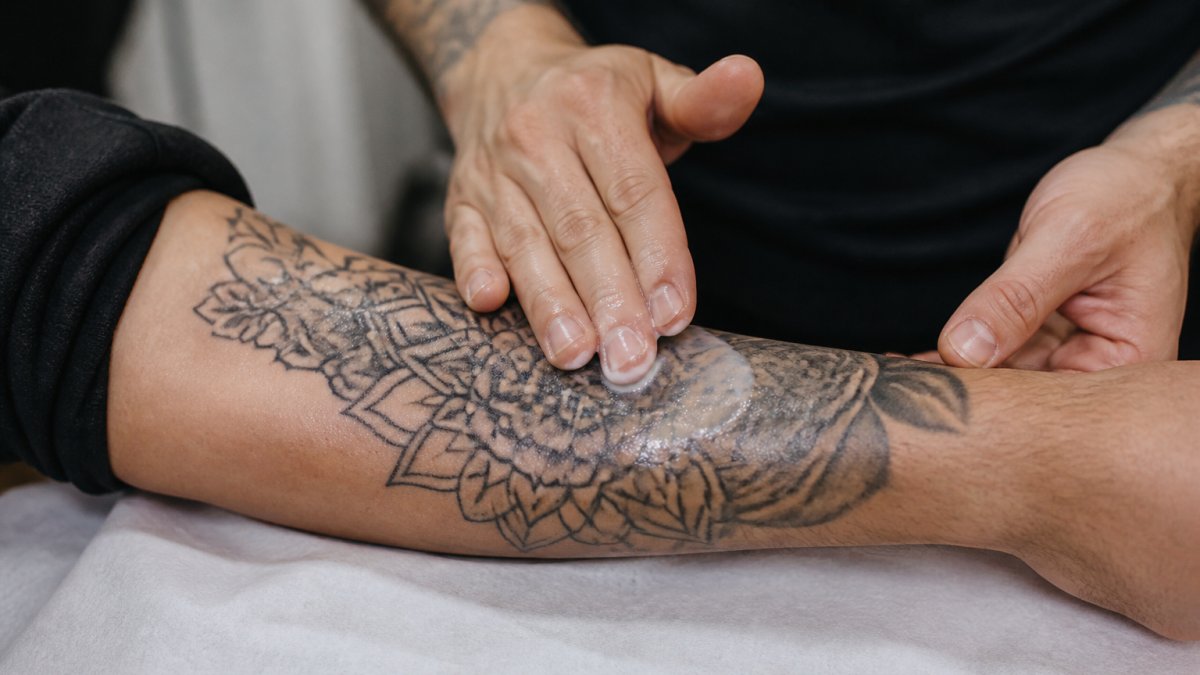
Apply balm 2-3 times daily during the first week, then once daily the following week. After day 14, most tattoos are stable enough to maintain with regular lotion.
Tattoo Aftercare Healing Stages and Product Selection
Tattoo healing happens in distinct phases, and your product strategy should shift with each one. Understanding these stages prevents common mistakes that ruin ink quality or slow recovery.
Days 1-3: Fresh Ink Phase
Your tattoo is technically an open wound: the needle punctured the dermis, and your skin is inflamed, weeping plasma, and extremely vulnerable. This is when you need maximum protection and hydration.
Use a balm during this phase, specifically a non-greasy one that won't trap bacteria or suffocate skin. Apply generously but not excessively, 2-3 times daily, keeping the area hydrated while letting it breathe. Many artists recommend wrapping for the first few hours, then switching to frequent balm applications.
During these first three days, avoid lotions, too light for this stage. Your skin needs the thicker barrier a balm provides. Scabbing or crusting is normal; don't pick at it or over-moisturize trying to prevent it. Let your skin do its job.
Days 4-7: Peeling and Itching Phase
By day four, the worst is over: your tattoo stops weeping, scabs form, and the itching starts. This phase tests your patience.
Switch to a lighter product now. A non-greasy lotion works better than a balm because it hydrates without trapping excess moisture under forming scabs. The itching comes from skin drying out as it heals, so hydration is crucial, but over-moisturizing blurs ink, keeps scabs wet longer, and slows healing.
Apply lotion 1-2 times daily, focusing on the edges where scabs form. Resist scratching, the itch means your skin is healing.
Days 8-14: Final Healing Phase
Most visible scabbing is done by day eight. Your tattoo looks dull and flakey, normal, as skin regenerates underneath and flakes shed naturally over the next few days.
Continue with a light lotion or switch back to a non-greasy balm if you prefer, many people use a balm now because their tattoo looks better with the added shine and moisture. Apply once daily, usually after showering. Keeping it hydrated now prevents dryness that makes ink look faded long-term.
By day fourteen, most tattoos are fully healed: the skin has closed and you're out of active recovery. From here, treat your tattoo like any other skin, keep it moisturized, protect it from sun, and use a quality balm or lotion daily.
Key Ingredients to Look For in Non-Greasy Formulas
Not all balms are created equal. The ingredient list tells you whether a product delivers non-greasy hydration or just feels heavy and suffocating.
Bigfoot Enhance Tattoo Balm - NOW 60ml →
Shea butter is the foundation of most good non-greasy balms: rich in fatty acids and vitamins that repair skin, but absorbing faster than petroleum-based products. Look for it high in the ingredient list.
Coconut oil adds moisture and has natural antimicrobial properties that protect healing skin. It's lighter than most oils and absorbs without residue.
Beeswax creates the protective barrier fresh ink needs, what makes a balm feel like a balm instead of a lotion, without clogging pores the way petroleum does.
Mango seed butter and castor oil are the secret ingredients in truly non-greasy formulas: serious hydration without the heavy feel, absorbing faster than traditional balm bases.
Avoid petroleum, mineral oil, and petrolatum for a truly non-greasy product. They lock moisture in effectively but also lock oxygen out, slowing healing and blurring or fading ink.
Also watch out for heavy fragrance or alcohol: fragrance irritates healing skin, and alcohol dries it out. A non-greasy formula should be fragrance-free or very lightly scented, and alcohol-free.
Bigfoot Enhance Tattoo Balm: Our Top Non-Greasy Pick
We built Bigfoot Enhance Tattoo Balm to solve the problem most people face: aftercare that either works but feels greasy, or feels good but doesn't protect well enough.
Our formula combines shea butter, coconut oil, mango seed butter, castor seed oil, beeswax, and cocoa butter for serious hydration and protection without heavy residue. It absorbs within 10-15 minutes, leaving skin moisturized but not slick, works on all tattoo types, black, gray, and color, and keeps ink vibrant long-term.
What sets it apart is the non-greasy finish: fast absorption and a clean feel instead of the heavy seal traditional balms provide. You get the protection you need without staining clothes or feeling like your skin can't breathe.
The balm comes in a 60ml tin at $35.00. One tin lasts most people through the entire healing process and beyond, since you only need a small amount each time. Many keep using it daily after healing.
For ongoing maintenance after healing, we also offer Bigfoot Replenish Tattoo & Body Lotion at $35.00 for 30ml. Lighter than the balm and fragrance-free, it's packed with plant oils, butters, and ceramides to lock in moisture and keep your skin solid. Many people use the balm during healing and switch to the lotion for daily maintenance.

If your tattoo gets irritated or itchy during healing, Bigfoot Repair Soothing Gel at $35.00 provides fast relief. Formulated without petrolatum or mineral oils, it supports healing instead of suffocating skin. The aloe and glycerin calm irritation quickly, and the lightweight formula absorbs instantly.
Common Mistakes That Ruin Tattoo Healing
Using too much product is the number one mistake. More balm doesn't mean better healing, excess moisture traps bacteria, keeps scabs wet longer, and blurs ink.
Switching products constantly confuses your skin. Pick a good non-greasy balm and stick with it through healing. Changing every few days disrupts your skin's recovery rhythm and often makes things worse.
Over-moisturizing during the peeling phase is another common trap.
Applying balm to wet skin prevents absorption, leaving a greasy layer that sits on top instead of sinking in. Always make sure your tattoo is completely dry before applying anything.
Using scented or alcohol-based products irritates healing skin. Fragrance and alcohol are common in cheap aftercare but dry out or inflame your tattoo. Stick with fragrance-free, alcohol-free formulas.
Ignoring the sun after healing is done. Your tattoo is protected during the first two weeks, but sun exposure fades ink over time. Use sunscreen year-round to keep it looking bold.
Healing a tattoo right preserves your art for years.
Get started with Bigfoot Enhance Tattoo Balm and keep your tattoos looking bold and vibrant from day one through years of wear.
Frequently Asked Questions
What is the best balm for tattoo aftercare?
The best non-greasy tattoo aftercare balm combines lightweight hydration with a fast-absorbing formula that won't leave residue on clothing or bedding. Look for balms with natural butters and oils like shea butter and coconut oil, paired with beeswax for barrier protection. Bigfoot Enhance Tattoo Balm delivers this balance at $35, offering clean ingredients without petroleum or mineral oils that can suffocate healing skin. The key is finding a formula that moisturizes without the sticky, greasy feel that interferes with daily life.
How do I keep my tattoo moisturized without it being greasy?
Use a small amount of balm and apply it with a massage technique that helps absorption rather than surface coating. Warm the product between your hands first, then work it in with circular motions. Non-greasy formulas use lightweight oils and antioxidant butters that sink into skin rather than sit on top. Avoid over-applying, which is the main cause of greasiness and product buildup.
What ingredients should I avoid in tattoo aftercare?
Avoid petroleum, mineral oils, and petrolatum-based products that lock moisture in but also block oxygen, slowing healing. Skip fragrance and artificial additives that can irritate fresh ink.
Do tattoo balms really work, or is it just marketing hype?
Tattoo balms work when they're formulated correctly and applied properly. However, results depend on application method (thin layers, not heavy coating), timing (use during active peeling), and consistency.