

5 Best Tattoo Lotions for Sensitive Skin
Table of Contents
- Quick Comparison: The 5 Best Tattoo Lotions for Sensitive Skin
- How We Evaluated These Lotions
- Bigfoot Replenish Tattoo & Body Lotion: Lightweight Hydration for Daily Care
- Bigfoot Repair Soothing Gel: Fast Relief for Fresh Tattoos
- Bigfoot Enhance Tattoo Balm: Long-Term Color Protection Without Grease
- Fragrance-Free Tattoo Lotion: Why Scent Matters for Sensitive Skin
- Tattoo Ointment vs Lotion: Which Heals Better for Sensitive Skin
- How Often to Moisturize a New Tattoo: Timing and Application
- Key Takeaways
- Frequently Asked Questions
Last Updated: October 16, 2026
Quick Comparison: The 5 Best Tattoo Lotions for Sensitive Skin
Finding the right tattoo lotion for sensitive skin can make the difference between vibrant, healthy ink and irritated, faded artwork. This guide covers the 5 best tattoo lotions for sensitive skin, evaluated with transparent criteria and ingredient breakdowns.
| Product | Type | Key Benefit | Price | Best For |
|---|---|---|---|---|
| Bigfoot Replenish Tattoo & Body Lotion | Lotion | Lightweight daily hydration | $35.00 | Healed tattoos & sensitive skin |
| Bigfoot Repair Soothing Gel | Gel | Fast relief for fresh ink | $35.00 | Fresh tattoos (first 7-14 days) |
| Bigfoot Enhance Tattoo Balm | Balm | Long-term color protection | $35.00 | Healed tattoos & ink vibrancy |
| Fragrance-Free Alternative | Lotion | Minimal irritation risk | Varies | Reactive skin |
| Non-greasy Option | Lotion | Moisture without residue | Varies | Daily wear & sensitive skin |
How We Evaluated These Lotions
We evaluated each option across five criteria: ingredient safety, fragrance-free formulation, hydration without greasiness, skin barrier support, and performance across fresh and healed tattoo stages.

Sensitive skin reacts to irritants like fragrance, alcohol, mineral oils, and petrolatum.
Lotions absorb fast and suit daily use on healed tattoos. Gels give quick cooling relief for inflammation. Balms offer richer nourishment for long-term color preservation.
Bigfoot Replenish Tattoo & Body Lotion: Lightweight Hydration for Daily Care
Our top pick for sensitive skin: it delivers daily hydration without the heavy residue that triggers irritation. The formula skips fragrance and silicone, making it safe for reactive skin from day one.
Bigfoot Replenish combines plant oils, ceramides, botanical extracts, and Vitamin A to lock in moisture, support your skin barrier, and aid collagen and cell turnover.
Use it twice daily on healed tattoos and whenever skin feels tight or dry.
Bigfoot Repair Soothing Gel: Fast Relief for Fresh Tattoos
Fresh tattoos hurt, itch, and swell. This gel is designed for that window, the first 7-14 days when skin is most reactive, easing redness and discomfort without the heavy occlusion that slows healing.
The key difference is what it doesn't contain. Petrolatum and mineral oils lock oxygen out, and fresh ink needs to breathe. Bigfoot Repair uses aloe vera, glycerin, and sweet almond oil instead, hydrators that feed skin without suffocating it, with an ultra-cooling sensation that relieves inflammation and itch.

Apply a generous amount with slow, circular massage motions. Let it sink in, then apply a second skin or wrap to lock in hydration. When you remove your wrap, switch to Bigfoot Replenish lotion for the next 7-14 days.
Bigfoot Enhance Tattoo Balm: Long-Term Color Protection Without Grease
Once your tattoo is healed, the work shifts from managing inflammation to preserving vibrancy.
The formula uses shea butter, coconut oil, mango seed butter, castor seed oil, and beeswax to repair your skin barrier and lock in hydration.
Apply a small amount daily after showering or whenever skin feels dry. Scoop from the tin, warm it between your hands, and massage it in.
Fragrance-Free Tattoo Lotion: Why Scent Matters for Sensitive Skin
The difference between "fragrance-free" and "unscented" matters: unscented products can still contain masking fragrances added to hide the smell of base ingredients, while fragrance-free products contain no added scent at all. For sensitive skin this distinction is critical, because fragrance is one of the most common causes of contact dermatitis, triggering redness, burning, and itching.
The irritants to scan for on a label
Read the ingredient list, not just front-of-pack claims. These categories are most likely to bother reactive skin:
- Added fragrance: Listed as "fragrance," "parfum," or "aroma." This is the single biggest offender.
- Essential oils used for scent: Lavender, tea tree, peppermint, citrus, and eucalyptus oils are natural but still common sensitizers. "Natural" does not mean "non-irritating."
- Mineral oil and petrolatum on fresh ink: These occlusives can trap bacteria and reduce oxygen exchange during the first week. They are less of a concern once a tattoo is fully healed.
What to look for instead
A sensitive-skin-friendly tattoo lotion leads with humectants and barrier-supporting ingredients rather than scent or occlusives: glycerin, aloe vera, ceramides, squalane, shea butter, lightweight plant oils like sweet almond or jojoba, plus panthenol (provitamin B5) and allantoin.
Patch testing: the step most people skip
Before committing a new product to a fresh tattoo, patch test it: apply a small amount to your inner forearm or behind your ear, cover it lightly, and wait 24 to 48 hours.
If irritation appears after you've applied a product to a tattoo, stop using it immediately, rinse with cool water and a fragrance-free cleanser, and let the skin rest.
Bigfoot Replenish, for example, is formulated without added fragrance and is built around plant oils and ceramides rather than scent or heavy occlusives, which is why it is the starting point for most reactive-skin routines in this guide.
Tattoo Ointment vs Lotion: Which Heals Better for Sensitive Skin
No single format wins across the whole healing timeline. Ointments, lotions, and gels each solve a different problem, and sensitive skin does best when you match the format to the stage.
Bigfoot Replenish Tattoo & Body Lotion - 30ml →
Ointments and balms: barrier protection, with caveats
Ointments are heavy, occlusive, petrolatum- or wax-based products that sit on top of the skin and slow water loss. Balms are a close cousin, usually built on shea butter, beeswax, or plant butters.
The trade-off is oxygen exchange and pore clogging. A thick occlusive layer on a fresh tattoo can trap bacteria and moisture against broken skin, and heavy occlusives commonly trigger clogged pores and bumps around the tattoo edge on sensitive skin.
Lotions: the everyday workhorse
Lotions are water-based emulsions that absorb quickly and leave little residue, hydrating without the suffocating feel of an ointment, the most comfortable option for most people with sensitive skin. The limitation is staying power: they may need reapplying two or three times a day and offer less protection than a balm on spots that rub against clothing.
Gels: short-term relief for the first week
Gels are water- or aloe-based and feel cooling on contact. They're useful in the first several days when inflammation, swelling, and itching peak, delivering lightweight hydration without occlusion. They aren't designed for long-term moisture retention, so most people transition off them once the acute phase passes.
Matching format to healing stage
| Stage | Typical timing | Best format | Why |
|---|---|---|---|
| Fresh tattoo | Days 1-7 | Gel or light lotion | Cooling, breathable, low occlusion on broken skin |
| Peeling and healing | Days 7-14 | Lotion | Hydration through flaking without heavy residue |
| Fully healed | 3+ weeks | Balm or lotion | Barrier support, color preservation, daily wear |
For sensitive skin, the pattern that causes the most trouble is using a rich ointment or balm too early. It feels protective, but on reactive skin it often leads to congestion, itching, and a slower-looking heal. Start with a gel or lightweight lotion and move to a balm once the surface has closed.
A staged approach, gel for the first week, lotion through the peeling phase, then a balm or lotion for maintenance, is what most practitioners recommend for reactive skin because it gives the skin what it needs at each point instead of forcing one texture to do every job.
How Often to Moisturize a New Tattoo: Timing and Application
Apply moisturizer 2-3 times daily for the first 7-14 days, then transition to once or twice daily for healed tattoos. Exact frequency depends on your skin's dryness and healing speed.
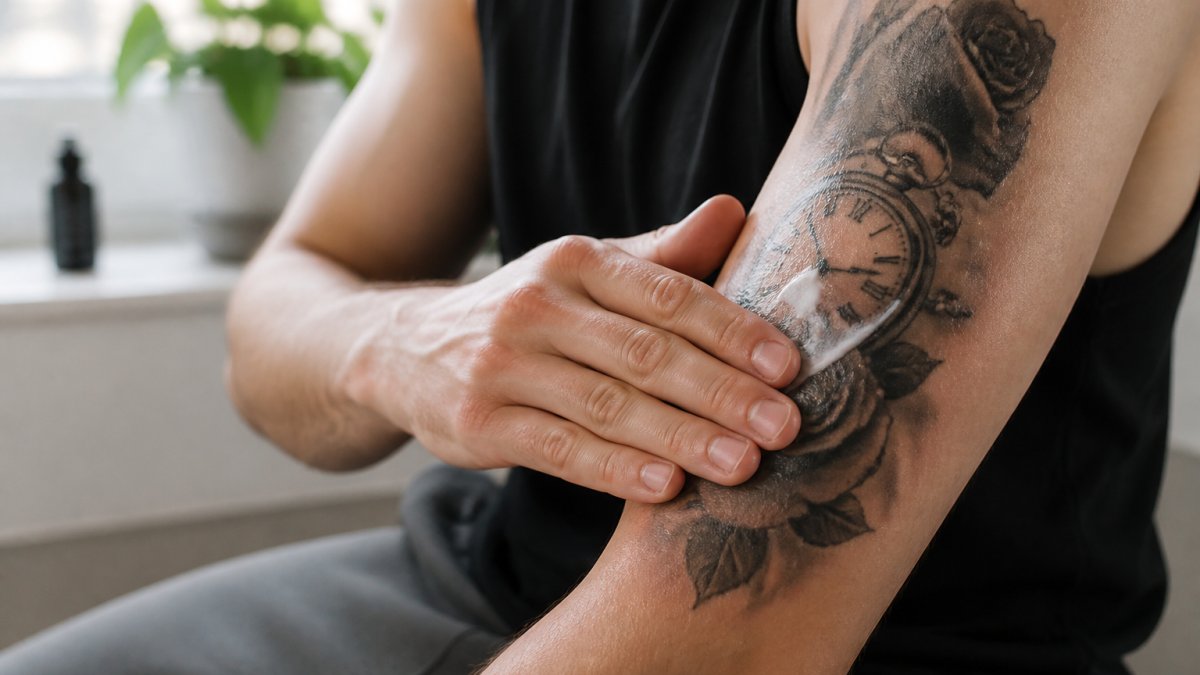
Fresh tattoo (days 1-7): Apply aftercare every 3-4 hours while awake.
Healing tattoo (days 7-14): Switch to 2-3 applications daily, morning, evening, and once during the day. Peeling around day 5-7 is normal.
Healed tattoo (3+ weeks): Drop to once or twice daily, or whenever your skin feels tight.
The most common mistake is underapplying. Use enough product that it feels wet on your skin, not just a light coating. Your tattoo is an open wound for the first week, treat it like one. Professional-grade products like those from Bigfoot Tattoo Products support proper healing without the guesswork.
Key Takeaways
- Sensitive skin requires fragrance-free, lightweight formulas that support your skin barrier without triggering irritation or inflammation.
- Fresh tattoos need different care than healed ones. Use a cooling gel for the first week, then switch to a lotion or balm for the healing and maintenance phases.
- Petrolatum and mineral oils can slow healing on fresh ink by blocking oxygen. Plant-based hydrators like aloe, glycerin, and natural oils are safer for sensitive skin.
According to dermatological research on tattoo healing, proper aftercare during the first two weeks is critical for preventing infection and preserving ink quality. Sensitive skin requires even more attention because the skin barrier is already compromised. Studies on fragrance sensitivity and dermatitis show that fragrance-free formulations significantly reduce irritation in reactive skin types.
The difference between professional-grade and generic aftercare comes down to ingredient quality and formulation science. At Bigfoot Tattoo Products, we've built our line for artists and clients who demand bold ink and fearless healing, designed to support every stage of the healing process.
Get started with Bigfoot Tattoo Products and protect your ink with formulas built for sensitive skin. The American Academy of Dermatology's tattoo aftercare guidance emphasizes keeping your tattoo clean, moisturized, and protected from sun exposure.
Frequently Asked Questions
What is the best lotion for a new tattoo if you have sensitive skin?
Fragrance-free, alcohol-free lotions with soothing ingredients like aloe vera and glycerin work best for sensitive skin. Bigfoot Repair Soothing Gel is designed specifically for fresh tattoos, calming irritation and redness without petrolatum or mineral oils that can suffocate healing skin. Follow with Bigfoot Replenish Tattoo & Body Lotion once your second skin is removed, as it contains ceramides and plant oils to lock in hydration without greasiness.
Can you use fragrance-free lotion on a healing tattoo?
Yes, fragrance-free lotion is ideal for healing tattoos, especially sensitive skin. Fragrance-free means no added scents at all, while unscented formulas may still contain masking fragrances. Bigfoot Replenish is silicone-free and scent-free, making it safe for fresh and healed tattoos. The absence of fragrance reduces the risk of allergic reactions and irritation during the critical healing window when your skin barrier is compromised.
What ingredients should you avoid in tattoo lotion if you have sensitive skin?
Avoid petrolatum, mineral oils, synthetic fragrances, alcohol, and heavy silicones. These ingredients can clog pores, trap bacteria, or trigger allergic reactions in sensitive skin. Bigfoot products skip these irritants entirely, using natural plant oils, butters, and ceramides instead. Always check labels for alcohol content and synthetic dyes, which are common culprits for post-tattoo irritation and delayed healing.
How often should you moisturize a healing tattoo?
For fresh tattoos, apply lotion 2-3 times daily for the first 7-14 days, or whenever your skin feels dry. Use Bigfoot Repair Soothing Gel immediately after getting inked, then switch to Bigfoot Replenish lotion once your second skin is removed. After full healing, continue daily application of Bigfoot Enhance Tattoo Balm to maintain ink vibrancy and prevent dryness. Consistent hydration keeps your skin barrier strong and your tattoo looking bold.
Is lotion or ointment better for tattoo aftercare?
Lotion is better for sensitive skin during healing because it absorbs faster and won't suffocate your tattoo. Ointments trap moisture but also trap bacteria and oxygen, slowing healing. Bigfoot Repair Soothing Gel uses lightweight hydrators instead of petrolatum-based ointments, letting your skin breathe while staying hydrated. Once healed, Bigfoot Enhance Tattoo Balm (a non-greasy balm) provides long-term protection without the heavy, occlusive feel of traditional ointments.